Key takeaways
- USDT keeps its peso value while you play, so a tournament bankroll doesn't move with crypto prices.
- Crypto sidesteps e-wallet limits — useful if you're moving larger sums across a month of betting.
- You don't need to own crypto: fund USDT straight from GCash or Maya in minutes.
- Send on TRC-20, match the network every time, and keep the same budget discipline as any other method.
For a single casual bet, GCash is hard to beat. But a World Cup is a month-long event, and for bettors planning a tournament bankroll, USDT has real advantages. This guide explains when crypto makes sense for betting and how to set it up — even if you’ve never owned a coin.
It mirrors our GCash betting guide; pick whichever method fits how you bet.
Why crypto suits tournament betting
Three concrete reasons, specific to a long event:
- Stable value. USDT is a stablecoin pegged to the US dollar. Your tournament bankroll holds its peso value across the whole month instead of swinging with Bitcoin’s price.
- No wallet limits. E-wallets cap per-transaction and daily amounts. Crypto doesn’t care whether you’re moving ₱500 or ₱50,000 — useful for bigger bankrolls.
- Privacy. There’s no bank or e-wallet processor between you and the sportsbook. You send from a wallet you control, directly.
For the full reasoning on crypto vs e-wallets, see our crypto casino vs GCash comparison — the logic is identical for betting.
”But I don’t own crypto” — that’s fine
You don’t need to already hold USDT. The most common path for Filipino bettors is to buy it with the wallet you already use, then send it on:
- From GCash → the GCash to USDT guide walks through it.
- From Maya or Binance P2P → see buying USDT with Maya & Binance P2P.
Both use BSP-registered platforms or reputable P2P marketplaces, and both finish with USDT in your wallet, ready to deposit.
Funding your bets with USDT
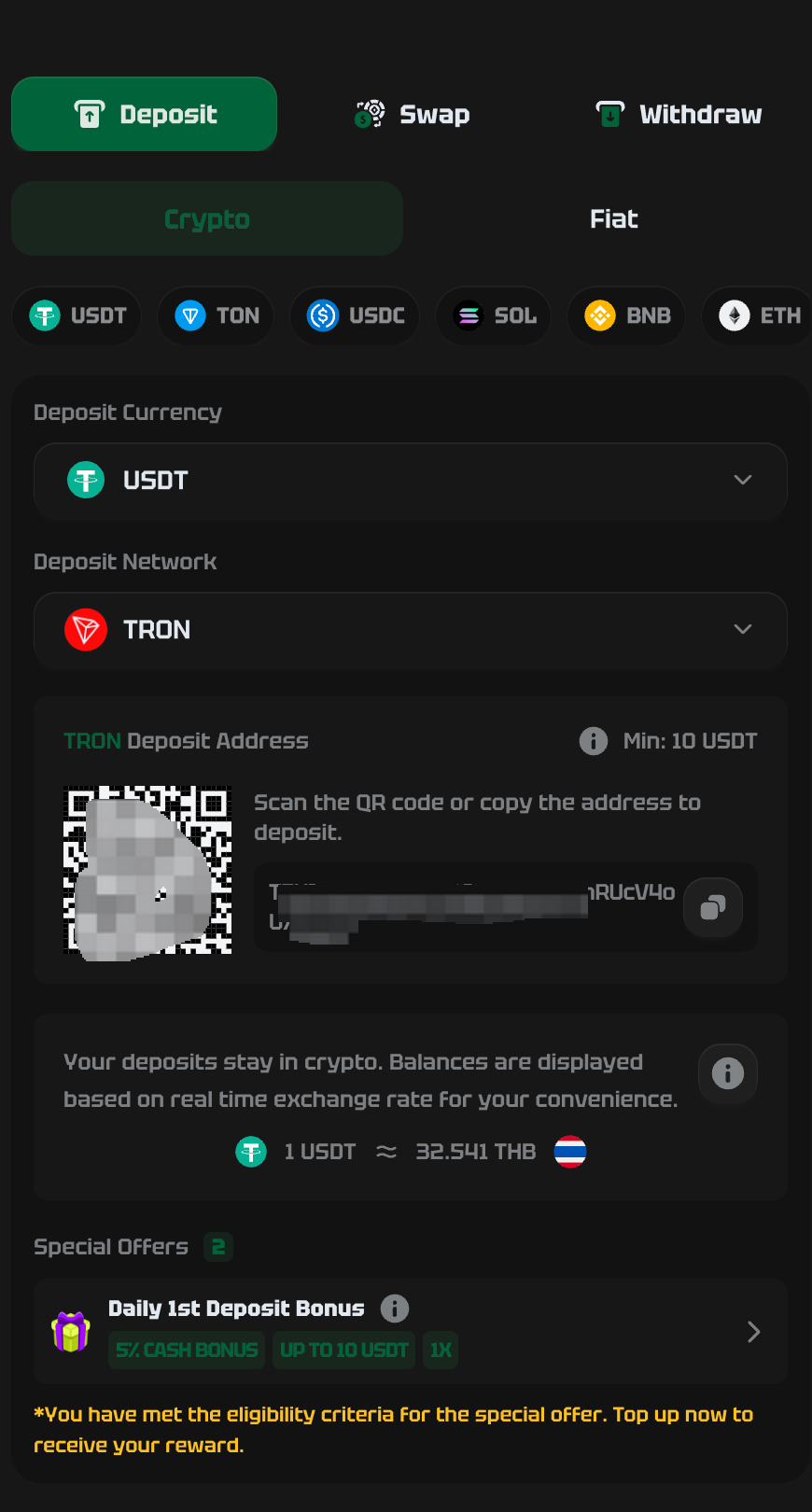
- On the sportsbook cashier, choose Crypto → USDT → TRC-20 and copy the deposit address.
- In your wallet, choose Send, select TRC-20, and paste that exact address. Check the first and last four characters match.
- Confirm. On a new site, send a small test amount first.
- The balance appears after a few network confirmations — minutes on TRC-20.
The golden rule, same as always: the network on your side must match the network the sportsbook gave you. Mismatched networks lose funds permanently. Our crypto deposits guide covers this in full.
Placing the bets
Once funded, USDT bets work exactly like any other — match markets, over/under, Asian handicap, an outright, or live in-play. The funding method doesn’t change how you bet, only how the money got there.
Cashing out winnings
Withdrawals reverse the path: cash out from the sportsbook to your wallet as USDT (TRC-20), then sell it back to pesos via the same exchange or P2P — to GCash or Maya. The withdraw-to-USDT guide covers timing, fees and the KYC step.
Same coin, same discipline
Crypto changes the rails, not the rules. Set a tournament budget before June 11, keep your stakes flat, don’t chase a bad night, and treat USDT exactly as carefully as pesos — it spends just as fast. If betting ever stops being fun, our responsible gambling resources are there to help.
Frequently asked questions
Why use USDT to bet on the World Cup instead of GCash?
Three reasons: privacy (no bank or e-wallet in the middle), no per-transaction wallet limits (handy for larger tournament bankrolls), and stable value (USDT is pegged to the US dollar, so ₱1,000 stays ₱1,000). GCash is simpler for small, casual bets; USDT shines for privacy and bigger sums over a long event.
Do I need to already own crypto to bet with USDT?
No. You can buy USDT with GCash or Maya through a registered exchange or P2P marketplace in a few minutes, then deposit it to the sportsbook. Our GCash-to-USDT and Maya/Binance P2P guides walk through it step by step.
Is betting with USDT just as fast as GCash?
Close. A USDT deposit on the TRC-20 network confirms in minutes, so you can fund a bet before kick-off. The one-time setup (buying and sending crypto the first time) is the only slower part — after that it's quick.